

A roof rarely fails without warning. Small clues—such as a ceiling stain, a lifted shingle, or unusual granules in a gutter—often appear before water enters the living space. For households in Fayetteville, NY, regular observation is especially useful because roofs must withstand snow, ice, wind, rain, and repeated freeze-thaw cycles.
What are the first signs of roof damage?
The earliest warning signs are usually changes in the roof’s appearance, drainage system, attic, or interior ceilings. Some problems are visible from the ground, while others require a cautious attic inspection.
Look for:
- Missing, cracked, curled, or lifted shingles
- Dark streaks or isolated stains on roofing materials
- Granules collecting in gutters or at the base of downspouts
- Sagging areas along the roofline
- Damaged flashing around chimneys, vents, skylights, and wall intersections
- Water marks on ceilings or upper-level walls
- Damp insulation, musty odors, or daylight visible through the attic
A single sign does not always indicate a major failure, but several signs appearing together deserve prompt attention.
How can roof damage be checked safely from the ground?
A ground-level inspection can reveal many problems without climbing onto the roof. Use binoculars if necessary, and inspect only from stable ground away from slippery surfaces, overhead wires, and falling debris.
View the roof from several sides of the property. Check whether the roofline looks straight and whether shingles appear uniform. Pay particular attention to roof sections beneath large branches, areas exposed to prevailing winds, and valleys where two roof slopes meet.
After a storm, inspect for:
- Shingles or fragments in the yard
- Bent or displaced metal components
- Exposed dark underlayment
- New gaps along roof edges
- Branch impact marks
- Loose material around vents or other roof penetrations
A roof may look intact from one side while damage remains hidden behind a chimney, dormer, or roof slope.
What do gutters and downspouts reveal about roof condition?
Gutters can provide useful evidence because they collect runoff and loose roofing material. A small amount of granule loss may occur as shingles age, but a sudden increase in gritty material after a storm can suggest surface deterioration or impact damage.
Also watch for:
- Granules concentrated near downspout outlets
- Shingle pieces mixed with leaves
- Persistent overflow during ordinary rainfall
- Water spilling behind the gutter
- Gutters pulling away from the fascia
- Ice buildup or staining along the roof edge
Clogged gutters do not automatically mean the roof is damaged, but blocked drainage can worsen roof-edge problems. Water that cannot move away efficiently may back up beneath shingles or soak fascia and soffit materials.
What interior signs suggest a roof leak?
Interior evidence is often the first reason a homeowner realizes there may be a roofing problem. A brown or yellow ceiling mark can indicate an active leak, an old leak, or moisture moving through the roof assembly before becoming visible indoors.
Inspect upper ceilings, attic floors, and the tops of exterior walls. Be alert for:
- Fresh or expanding stains
- Peeling paint or bubbling drywall
- Damp insulation
- Mold-like growth or a persistent musty smell
- Wet wood around roof penetrations
- Drips that appear during rain or after snow melts
The location of a ceiling stain may not match the location of the roof opening. Water can travel along rafters, sheathing, insulation, or framing before reaching the interior surface. For that reason, patching the visible stain alone does not identify the source.
If water is near a light fixture, electrical wiring, or an active ceiling leak, avoid touching the area and keep clear until the electrical hazard has been addressed.
Why are flashing and roof penetrations common trouble spots?
Flashing directs water away from places where the roof meets another surface or where an opening passes through the roof. These areas include chimneys, plumbing vents, skylights, dormers, walls, and valleys.
Early flashing problems may appear as:
- Bent or corroded metal
- Missing sealant or cracked sealant joints
- Gaps between flashing and masonry
- Loose components after high winds
- Stains below a chimney or vent inside the attic
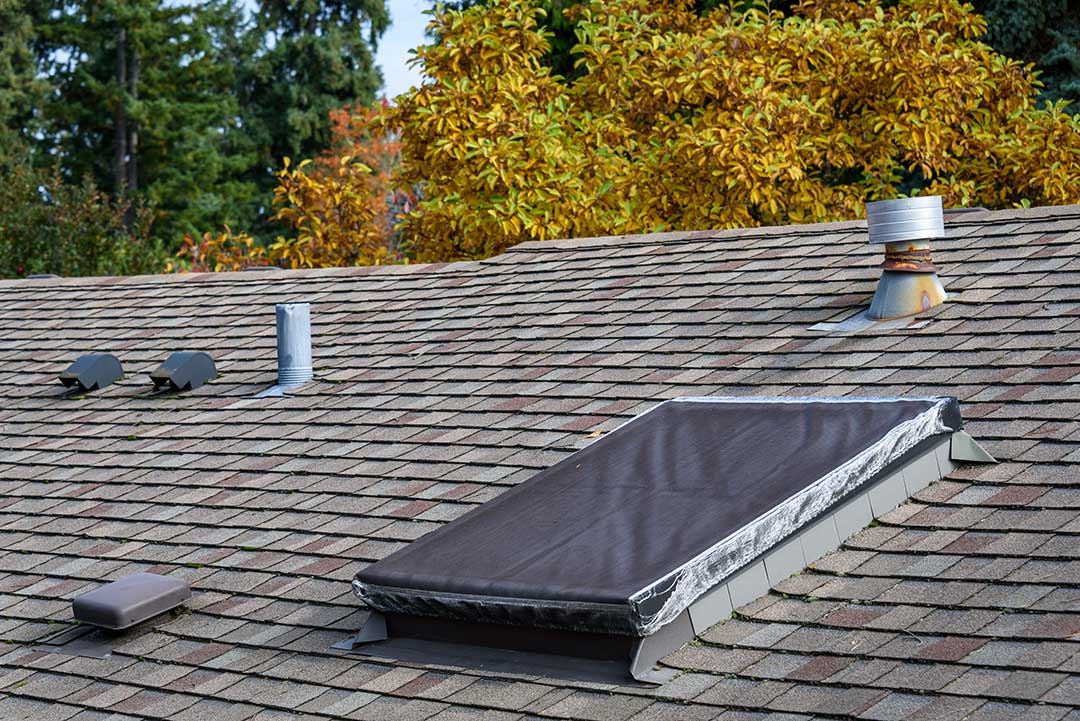
Sealant alone is not a permanent substitute for properly installed flashing. Repeated expansion and contraction can cause sealants to crack, shrink, or pull away, particularly through changing seasonal temperatures.
How do snow and ice affect early roof damage in Fayetteville?
Winter conditions can expose weaknesses that were not obvious during warmer months. Snow adds weight, while melting snow can refreeze near colder roof edges. This may create ice dams, which obstruct drainage and allow water to move beneath roofing materials.
Warning signs after winter weather include:
- Thick ice along roof edges
- Icicles accompanied by indoor staining
- Wet insulation near eaves
- Drips appearing during a thaw
- Distorted gutters or fascia
- Shingles that remain damp long after nearby areas have dried
Ice at the edge is not automatically proof of a roof defect. However, recurring ice buildup combined with attic moisture or interior staining suggests that ventilation, insulation, drainage, or roof detailing may need closer evaluation.
Can roof damage be hidden even when the shingles look fine?
Yes. Shingles can appear acceptable while underlying components are deteriorating. Hidden problems may involve roof decking, underlayment, flashing, ventilation, or moisture trapped in insulation.
A roof may also show no indoor leak during dry weather. Small openings can allow water in only when wind drives rain from a particular direction. Similarly, a leak may remain concealed until snow melts or accumulated moisture reaches a vulnerable seam.
Attic checks are most useful from the floor or another secure location. Do not walk on roof decking unless it is known to be safe and properly supported. Wet insulation, weakened wood, steep slopes, and limited lighting create fall hazards.
How often should a roof be checked?
A practical routine is to look over the roof from the ground twice a year—typically in spring and fall—and again after unusually strong wind, heavy snowfall, or falling branches. Interior ceilings and the attic can be checked at the same time.
Keep a simple record of:
- The date of each inspection
- New stains or changes in existing marks
- Areas where shingles look different
- Gutter debris or drainage problems
- Storm events that may have affected the roof
Photographs taken from the same locations make gradual changes easier to recognize. Early documentation is also useful when determining whether a problem is expanding or remaining stable.
When does a roof problem require immediate attention?
Some conditions should not wait for a routine inspection. Immediate safety concerns include an active ceiling leak, a sagging roof section, exposed electrical components near water, widespread missing shingles, or a large opening caused by a branch or other impact.
Avoid climbing onto a wet, icy, or steep roof. Roof access can turn a manageable repair issue into a serious fall injury. If temporary protection is necessary, it should be handled only from a safe position and without placing weight on damaged areas.
Early roof checks do not replace a detailed evaluation when damage is suspected, but they can help residents recognize problems before moisture spreads into insulation, framing, ceilings, and finished rooms.
