
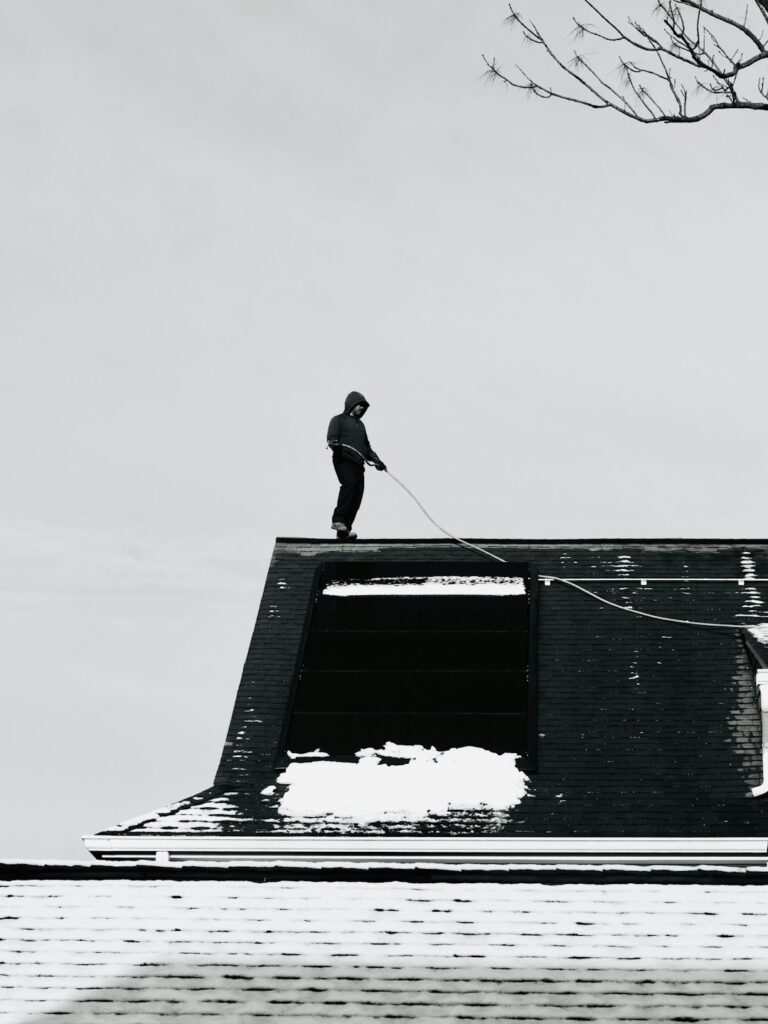
Regular roof maintenance helps prevent small defects from becoming leaks, structural damage, or expensive interior repairs. For households in Fayetteville, seasonal snow, ice, wind, rain, and repeated freeze-thaw cycles make routine observation especially useful.
A roof does not usually fail all at once. More often, damage develops gradually around flashing, roof edges, valleys, vents, chimneys, gutters, or areas where water remains after a storm. Maintenance provides an opportunity to identify those weak points before they affect insulation, ceilings, walls, or framing.
What does regular roof maintenance include?
Regular maintenance means checking the roof system and related drainage components at appropriate times of the year. It is not limited to replacing shingles.
A basic maintenance routine may include:
- Looking for missing, cracked, curled, or lifted shingles
- Checking metal flashing around chimneys, skylights, vents, and wall intersections
- Clearing leaves, twigs, and other debris from roof valleys and gutters
- Looking for sagging areas or unusual depressions
- Examining exposed roofing materials for excessive wear
- Checking whether gutters and downspouts direct water away from the foundation
- Inspecting attic areas for damp insulation, staining, daylight, or musty odors
- Reviewing the roof after major wind, ice, or snow events
Some observations can be made from the ground with binoculars. Walking on a sloped or wet roof can damage materials and create a fall hazard, so roof access should not be treated as a routine do-it-yourself task.
How does maintenance prevent leaks?
Maintenance reduces the chance that water will enter through small openings that are easy to overlook. Shingles may still appear intact while sealant, flashing, or roof penetrations have begun to deteriorate.
Water often enters at transition points rather than in the middle of an otherwise healthy roof. Common vulnerable areas include:
- Where two roof sections meet
- Around plumbing vent pipes
- Near chimneys and skylights
- Along roof edges and eaves
- Beneath damaged flashing
- Around old nail holes or exposed fasteners
- In valleys where runoff is concentrated
A small leak may travel along rafters, roof decking, insulation, or wall cavities before appearing as a ceiling stain. By the time interior damage becomes visible, the original entry point may be several feet away. Routine inspection can help connect early exterior warning signs with the areas most likely to need attention.
Why is roof maintenance especially useful in Fayetteville?
The local climate places repeated stress on roofing materials. Winter precipitation may arrive as snow, sleet, freezing rain, or rain, and temperatures can move above and below freezing several times during the season. These changes can loosen materials, open small gaps, and increase the movement of water beneath roofing components.
Snow and ice also create added concerns. Snow can accumulate in roof valleys, behind wall projections, or near changes in roof height. Wind may form uneven drifts, placing more weight on some sections than others. Ice can block normal drainage and contribute to water backing up beneath roof edges.
Spring often reveals problems that were not obvious during winter. Meltwater may expose damaged shingles, displaced flashing, clogged gutters, or areas where ice affected the roof edge. Summer heat, strong thunderstorms, falling branches, and heavy rainfall can then add different forms of stress.
This seasonal pattern makes a spring and fall inspection sensible for many homes, with additional checks after severe weather.
Can maintenance extend the life of a roof?
Yes. Maintenance cannot stop normal aging, but it can reduce avoidable deterioration. A roof that drains properly and remains free of damaging debris generally experiences less moisture exposure than one with blocked gutters, standing water, or persistent organic growth.
Small repairs may also protect surrounding materials. For example, replacing a damaged flashing section can help prevent moisture from reaching roof decking. Securing a loose shingle can reduce the chance of wind lifting nearby shingles. Clearing a blocked downspout can limit water overflow against siding, trim, and foundation areas.
The benefit is not simply a longer service life for the visible roofing material. Proper maintenance also helps preserve underlayment, decking, insulation, attic ventilation components, gutters, fascia, and interior finishes.
What problems can be found inside the attic?
The attic often provides useful information because it shows whether the roof is keeping water out and allowing moisture to escape.
Warning signs may include:
- Dark stains on roof decking or rafters
- Damp or compressed insulation
- Mold-like odors
- Condensation on nails or metal surfaces
- Frost buildup during cold weather
- Daylight visible through areas that should be sealed
- Wet spots that appear after rain or snowmelt

Not every attic moisture problem comes from a roof leak. Inadequate ventilation, air leakage from the living space, bathroom exhaust directed into the attic, or high indoor humidity can also create condensation. Correctly identifying the source matters because sealing a roof leak will not solve a ventilation or moisture-control problem.
Does gutter maintenance count as roof maintenance?
Yes. Gutters and downspouts are part of the roof drainage system. They collect runoff and move it away from roof edges, siding, doors, windows, and foundations.
A gutter that is full of leaves or granular roofing debris may overflow during heavy rain. Loose sections can allow water to run behind the gutter or down the fascia. Downspouts that discharge too close to the house may contribute to basement moisture or soil erosion.
Gutters should be checked in spring and fall, and more often where mature trees overhang the roof. After cleaning, water should flow freely through the system without pooling or spilling over the front edge.
What are the warning signs that a roof needs attention?
Some signs call for prompt evaluation rather than waiting for the next seasonal check:
- A ceiling stain that grows or returns
- Water dripping into an attic, room, or wall
- Several missing or visibly damaged shingles
- A sagging roofline
- Large amounts of roofing granules in gutters
- Torn or displaced flashing
- Persistent dampness around chimneys or skylights
- A gutter pulling away from the roof edge
- Damage after high winds, falling branches, or heavy ice
A sagging area, active leak near electrical equipment, or roof section covered by substantial ice or snow can present safety risks. People should avoid climbing onto unstable or icy surfaces. Roof repairs involving structural damage, difficult access, or required code compliance may also require qualified assistance. In Fayetteville, roof alterations and replacements can fall under local and New York State building requirements, so permit questions should be confirmed before significant work begins.
How often should a roof be checked?
A practical schedule is to inspect the roof system in spring and fall, then perform an additional visual check after unusually severe weather. Older roofs, roofs beneath large trees, and roofs with complicated designs may need closer observation.
Homeowners do not need to wait for a leak to begin paying attention. Keeping simple records of inspection dates, visible changes, repairs, and the roof’s approximate age can make future decisions more informed. It also helps distinguish a new problem from an older stain or previously repaired area.
The main purpose of regular maintenance is early knowledge. Finding a loose flashing edge or blocked drainage path is usually easier to manage than discovering widespread water damage after a ceiling begins to sag.
